


21 February 2026, Mumbai
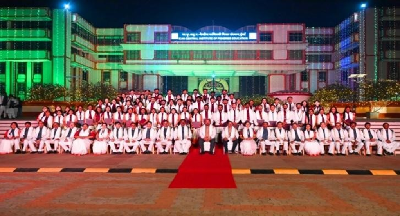
ICAR-Central Institute of Fisheries Education celebrated its XIX Convocation today conferring degrees upon a total of 143 students, including 94 Master’s and 49 Ph.D. scholars. The degrees were awarded by Dr N. P. Sahu, Director and Vice-Chancellor, ICAR-CIFE.
The Chief Guest, Dr M. L. Jat, Secretary, DARE and Director General, ICAR, presented gold medals to meritorious students and delivered the Convocation Address.

In his address, Dr Jat highlighted the pivotal role of professional fisheries education in supporting a dynamic and rapidly expanding sector that provides livelihoods to nearly 30 million people across India. He noted that globally, capture fisheries and aquaculture now contribute almost equally to total fish production, reflecting a paradigm shift toward advanced aquaculture systems that conserve and recycle water and energy, utilise genetically improved strains, and adopt efficient feed and health management strategies.
He emphasized that this evolving landscape offers significant opportunities for fisheries professionals, who are well positioned to emerge as entrepreneurs and should capitalise on the country’s growing start-up ecosystem. He further noted that ICAR-CIFE, along with other ICAR fisheries institutes and agricultural universities, has developed advanced technologies capable of fostering enterprise development. Appreciating ICAR-CIFE’s initiatives to promote student entrepreneurship, he expressed confidence that such efforts would contribute to India’s transition from a service-based economy to a knowledge-driven economy and support the national vision of achieving a “Viksit Bharat” by 2047.
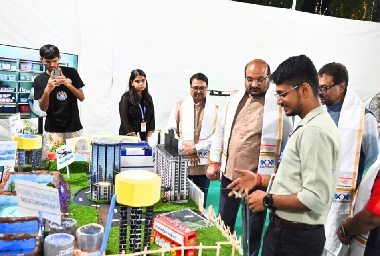
Dr Joykrushna Jena, Deputy Director General (Fisheries Science) and in additional charge of the Education Division, ICAR, attended the ceremony as the Guest of Honour.
India’s fisheries sector continues to demonstrate robust growth. In 2025, the country achieved a record fish production of 197.75 lakh tonnes, making India the second-largest fish producer globally with an 8% share of world production. Fisheries and aquaculture contribute approximately 1.24% to the national GDP. During 2023–24, fisheries exports reached 16.98 lakh tonnes, valued at ₹62,408 crore. Since 2014–15, the sector has registered an average annual growth rate exceeding 11%.
Following the implementation of the Pradhan Mantri Matsya Sampada Yojana (PMMSY) from 2020 to 2025, the Government of India has launched the Pradhan Mantri Matsya Kisan Samridhi Sah-Yojana (PM-MKSSY). Additionally, the Kisan Credit Card (KCC) facility has been extended to fishers and fish farmers to improve access to institutional credit.
Looking ahead, Bharat-VISTAAR, a proposed multilingual AI-based tool designed to integrate AgriStack portals with ICAR’s knowledge systems, is expected to further strengthen digital support for the agriculture and fisheries sectors. The role of fisheries education and skilled professionals will remain crucial in this transformative journey toward positioning India as a leading global producer and consumer of high-quality fish.
(Source: ICAR-Central Institute of Fisheries Education, Mumbai)


Like on Facebook
Subscribe on Youtube
Follow on X X
Like on instagram