


For Sri Pabir Das, a potato grower from Salema village in Dhalai district of Tripura, the 2025–26 rabi season brought encouraging results, demonstrating how improved crop varieties, backed by scientific guidance and institutional support, can enhance farm productivity and profitability. By cultivating Kufri Himalini, an improved potato variety, in place of his familiar Kufri Jyoti, he achieved a 26.85% increase in yield, offering a promising example for potato growers in the region.
Potato is an important rabi-season vegetable and cash crop in Tripura, ranking second after rice in the state's cropping system. Its contribution to seasonal farm income, however, depends on several factors, including the availability of healthy seed tubers, varietal suitability, proper drainage, balanced nutrient management, timely irrigation and effective disease control. In humid growing conditions, the risk of late blight further underscores the need for suitable varieties and scientific crop-management practices.
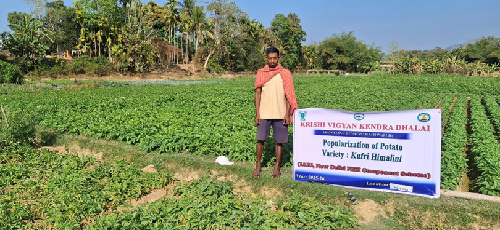
Recognising these challenges, Krishi Vigyan Kendra (KVK), Dhalai, Salema, implemented a frontline demonstration and varietal popularisation initiative on Sri Pabir Das's farm during the 2025–26 rabi season. The initiative received technology and input support from ICAR–Indian Agricultural Research Institute (IARI), New Delhi, under the North Eastern Hill (NEH) Component Scheme, with technical supervision from ICAR–Agricultural Technology Application Research Institute (ATARI), Zone VII, Umiam, Meghalaya. The demonstration assessed the performance of Kufri Himalini against Kufri Jyoti, the variety traditionally cultivated by the farmer, under the prevailing agroclimatic conditions of Dhalai district.
The intervention went beyond introducing an improved variety. KVK Dhalai guided the farmer in adopting scientific cultivation practices, beginning with the selection of healthy, disease-free seed tubers and the preparation of a well-drained field. Planting was undertaken on ridges at a spacing of 60 × 20 cm, supported by balanced organic and inorganic nutrient application based on soil-test results and local recommendations. Timely weed management, earthing up and irrigation according to soil moisture requirements formed important components of the package. Regular monitoring for late blight, along with careful harvesting and grading of mature tubers, further supported crop management.
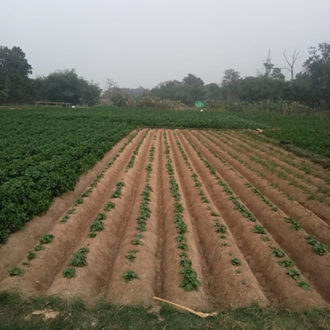
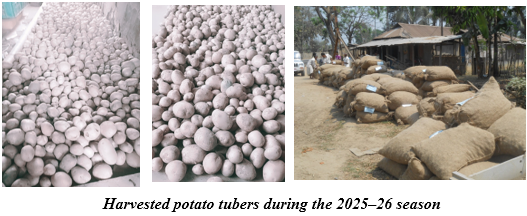
The results were encouraging. Under the improved technology package, Kufri Himalini recorded a total tuber yield of 32.60 tonnes per hectare, compared with 25.70 tonnes per hectare from Kufri Jyoti under the farmer's existing practices. This translated into an additional yield of 6.90 tonnes per hectare, representing a 26.85% increase in productivity. The demonstration also recorded late-blight incidence of 4% in Kufri Himalini, compared with 12% in Kufri Jyoti, highlighting the improved variety's comparatively favourable disease response under the conditions observed. Although moderate resistance does not eliminate the risk of infection, this characteristic makes Kufri Himalini a promising option for further evaluation in the humid potato-growing areas of Tripura.
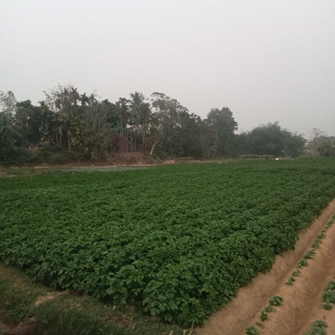
Higher productivity also translated into improved economic returns. At a model farm-gate price of ₹15 per kg, the marketable yield of Kufri Himalini was estimated at 293.40 quintals per hectare, generating a gross return of ₹4,40,100 per hectare. With a cultivation cost of ₹1,25,000 per hectare, the estimated net return stood at ₹3,15,100 per hectare, with a benefit-cost ratio of 3.52:1. In comparison, Kufri Jyoti recorded a marketable yield of 221.02 quintals per hectare, a gross return of ₹3,31,530 and a net return of ₹2,17,530 per hectare, with a benefit-cost ratio of 2.91:1. The improved technology package thus delivered an estimated additional net return of ₹97,570 per hectare, demonstrating the economic potential of combining an improved variety with scientific crop management. Actual returns, however, remain subject to cultivation costs, market prices and the proportion of produce that is marketable.
Reflecting on the experience, Sri Pabir Das expressed satisfaction with the performance of Kufri Himalini and acknowledged the role of KVK scientists in guiding him towards improved cultivation practices. He noted that the higher yield compared with Kufri Jyoti had strengthened his confidence in the improved variety. He also expressed his intention to continue cultivating Kufri Himalini and encourage other farmers in his village to adopt improved potato varieties and scientific farming methods.
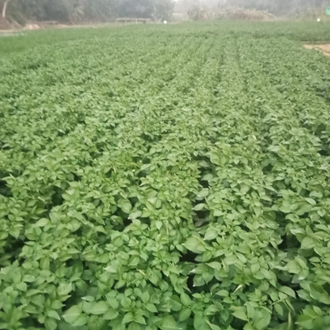
The demonstration has significance beyond a single farm. The healthy crop growth, satisfactory tuber development and higher productivity observed on Sri Pabir Das's field provide a practical reference for neighbouring farmers considering alternatives to their existing varieties. It also reinforces the importance of combining improved planting material with balanced nutrient management, proper drainage, timely irrigation and integrated disease management to achieve better and more consistent results.
The success of Kufri Himalini in Salema reflects the value of coordinated efforts among agricultural research institutions and extension agencies in taking improved technologies to farmers' fields. Through the technology and input support of ICAR–IARI, implementation by KVK Dhalai and technical supervision by ICAR–ATARI Zone VII, the demonstration showcased the potential of research-backed interventions to improve potato productivity and farm profitability in Dhalai district.
Sri Pabir Das's experience offers an encouraging example for potato growers in Tripura and other suitable growing areas of the Northeast. Wider evaluation and popularisation of Kufri Himalini, alongside scientific crop-management practices, could help farmers make informed varietal choices, improve marketable production and strengthen farm incomes. The demonstration thus underscores how the convergence of improved varieties, scientific guidance and institutional support can contribute to more productive and sustainable potato cultivation in the region.
(Source: Krishi Vigyan Kendra, Dhalai)


Like on Facebook
Subscribe on Youtube
Follow on X X
Like on instagram