


Interventions of water harvesting based integrated farming systems were carried out in two clusters of villages in Dhenkanal Sadar and Odapada blocks of Dhenkanal District in Odisha. Ten water harvesting structures (WHS) were constructed in two clusters of villages in the farmers' field on a participatory basis. Harvested water in WHSs was used for multiple purposes viz. agriculture, fish culture, on-dyke horticulture, vegetable cultivation, poultry, dairy and mushroom cultivation; integrated farming system (IFS) models were developed. The components of the land area for the IFS units comprised pond area, embankment or bund area, upland area and cultivated paddy area.
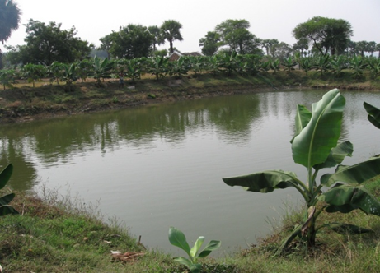
The net income from the integrated farming systems varied from Rs. 16,100 and 251,000 per ha. Poultry farming in the uplands and intensive cultivation around the embankments of the pond were found to be effective in increasing net return from the IFS models. The considerable variation in net income per ha in different IFS models emphasized the role of the farmer in building a successful model.
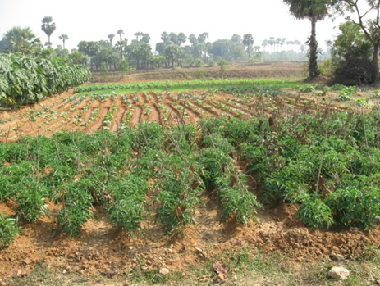
The comparative stock of the physical, social, financial, human and natural assets of farmers were analysed considering the conditions before and after adoption of the technology. The variables under above 5 types of assets were measured on the basis of the responses of the farmers on a 5-point continuum scale (minimum and maximum value are 1 and 5, respectively) during an interview using a pretested survey schedule. The overall standard of living of farmers was assessed on the basis of their asset holding before and after the technology introduction, the value of overall standard of living ranging from 5 to 25.Maximum improvement occurred in natural assets which increased by 70%, followed by 24% increase of physical assets. Social and financial asset gains were found to be in the range of 17–21%.The overall standard of living of farmers due to the interventions increased from 13.5 to 17.1 in a scale of 5 to 25, respectively.
(Source: ICAR-Indian Institute of Water Management, Bhubaneswar)


Like on Facebook
Subscribe on Youtube
Follow on X X
Like on instagram