


7-10 October 2026, Andhra Pradesh
ICAR–Central Coastal Agricultural Research Institute, Goa, in collaboration with The Energy and Resources Institute (TERI), organised a four-day Training-cum-Awareness Programme on Climate-Resilient Fish Farming and Financial Literacy under the ADB-funded project “Building Capacity for Climate Change Adaptation in Smallholder Fish Farming” from 7 to 10 October 2026 in Andhra Pradesh. The programme included a training session at Palakollu on 7 October, followed by a session at Kaikaluru on 8 October and field visits to aquaculture farms on 9 and 10 October.
The initiative aimed to enhance farmers’ technical knowledge, promote climate-smart aquaculture practices, improve awareness of financial services and insurance, and identify practical solutions to challenges faced by smallholder fish farmers.
The technical sessions covered fish culture, climate-smart aquaculture, farm management, disease prevention, sustainable coastal aquaculture regulations, and insurance. The session on climate-smart aquaculture explained the programme’s objectives, while another session addressed fish culture. Current issues and challenges in shrimp and fish farming were also discussed.
A session titled “Small Pond, Smart Farming, Bigger Returns” highlighted innovative and efficient farming practices. The statutory provisions for sustainable coastal aquaculture and shrimp insurance were also explained. The programme further featured contributions from fisheries officials, financial-sector representatives, and farmer association representatives, followed by interactive discussions and question-and-answer sessions.
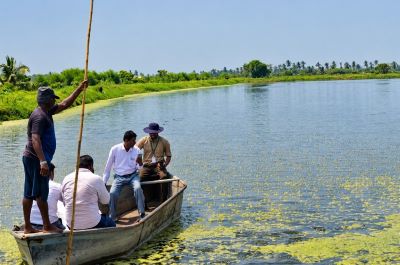
Field visits provided opportunities to interact with farmers engaged in Pangasius, seabass, shrimp, and crab farming and to understand their existing farming practices and production constraints. Key concerns included limited availability and high costs of quality seed, disease outbreaks, water quality deterioration, high temperatures, feed management, inadequate technical support, and marketing difficulties.
Seabass farmers highlighted concerns about toxic algal blooms in canal water and the need for affordable formulated feed as an alternative to live feed. Crab farmers identified the need for improved seed supply, local hatcheries, demonstration farms, better marketing channels, crop insurance awareness, and technical support. These interactions helped identify priority areas for future capacity-building activities and technical interventions.
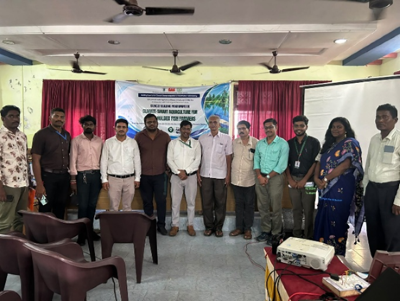
Overall, the four-day programme strengthened interaction among farmers, scientists, fisheries officials, financial institutions, and industry representatives. The participation of 146 farmers, including 27 women, supported inclusive knowledge sharing and capacity development.
The feedback and fieldobservations will help guide future farmer-oriented training, technical demonstrations, and extension activities to improve farm management, promote climate-resilient aquaculture, strengthen financial awareness, and support sustainable livelihoods among smallholder fish farmers in Andhra Pradesh.
A total of 146 farmers, including 27 women, participated in the programme.
(Source: ICAR–Central Coastal Agricultural Research Institute, Goa)


फेसबुक पर लाइक करें
यूट्यूब पर सदस्यता लें
X पर फॉलो करना X
इंस्टाग्राम पर लाइक करें