

17 June 2026, Pune
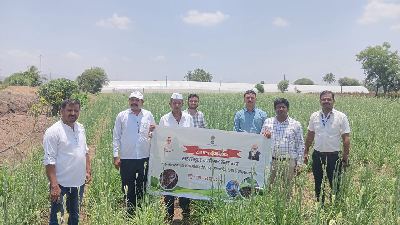
As part of the ongoing Khet Bachao Abhiyan, a multidisciplinary team of scientists from ICAR–Directorate of Floricultural Research, Pune, conducted a comprehensive farmer outreach programme at Nimdari village in Junnar taluka of Pune district today. The programme involved training cum demonstration programme on preparation of natural farming inputs, awareness on scientific interpretation of soil health card report based on soil test based fertiliser recommendations followed by a field visit to farmer’s field.
Farmers were trained in the preparation and application of various natural formulations like Jeevamrit, Beejamrit, Ghan Jeevamrit used in eco-friendly farming practices. Farmers were sensitized about various principles and benefits of natural farming including use of on-farm biological inputs, conservation of soil biodiversity, enhancement of nutrient cycling, and ill effects of excessive use of synthetic fertilizers and pesticides. Scientists also explained the role of alternative nutrient sources such as farmyard manure, compost, vermicompost, crop residues, and other locally available organic resources in enhancing soil health.
Farmers were also advised on the scientific interpretation of Soil Health Card reports. Participants were advised on understanding soil test parameters and utilizing the recommendations for soil test based fertilizer application. The session highlighted balanced nutrient management, efficient fertilizer use, and the importance of maintaining long term soil fertility for sustainable crop production.
The programme also included a field visit to farmers’ plots, where standing crops were assessed for pest and disease incidence. During the visit, a case of mealy bug infestation on tuberose crop was observed. Farmers were provided with appropriate pest management recommendations, including integrated pest management practices, field sanitation measures, and suitable control strategies to minimize crop losses.
A total of 18 participants were actively involved in the training programme. They interacted with the scientist team and sought solutions to various crop production challenges. The initiative aimed to strengthen farmers’ knowledge and encourage the adoption of scientific and sustainable agricultural practices for improved productivity and profitability.
(Source: ICAR–Directorate of Floricultural Research, Pune)


फेसबुक पर लाइक करें
यूट्यूब पर सदस्यता लें
X पर फॉलो करना X
इंस्टाग्राम पर लाइक करें