

In the remote village of Tsongpong, nestled in the scenic landscapes of Nagaland’s Kiphire district, a quiet revolution has taken root. The protagonist of this story, Gloria Sangtam, a 38-year-old farmer, stands as a beacon of hope and transformation in her community. Gloria’s journey from traditional farming methods to embracing the principles of Natural Farming, with the guidance of KVK Kiphire, is a tale of perseverance, innovation and the power of sustainable agriculture.
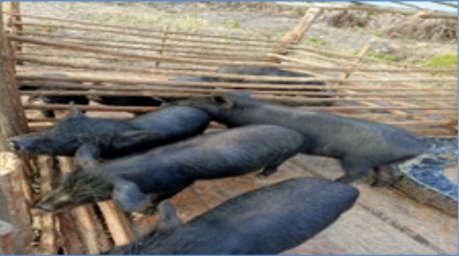
Gloria Sangtam hails from Tsongpong, a small village in the Longmatra block of Kiphire district. Like many others in her community, Gloria relied on traditional farming practices to sustain her livelihood. On her one-acre plot of land, she cultivated maize, rajma, soybean, groundnut and winter vegetables such as cabbage and mustard. Alongside crop farming, she also engaged in piggery and backyard poultry farming, which supplemented her income. However, despite her hard work, Gloria’s annual earnings barely touched Rs. 30,000, an amount insufficient to support her family and meet their basic needs.
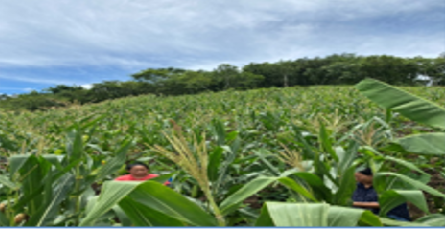
The challenges Gloria faced were numerous. Her farming practices were largely unscientific, lacking in proper soil fertility management, water conservation and pest control techniques. The absence of these critical agricultural practices resulted in low productivity and poor yields, leaving Gloria trapped in a cycle of poverty and limited opportunities. The situation was further exacerbated by the degradation of soil quality and the depletion of nutrients, which made farming increasingly unsustainable.
The turning point in Gloria’s life came when she was introduced to the concept of Natural Farming by the Krishi Vigyan Kendra (KVK) in Kiphire. Recognizing the potential of this farming method to transform the lives of farmers like Gloria, KVK Kiphire took the initiative to establish a demonstration unit on her farm. Natural Farming, which emphasizes the use of locally sourced organic inputs and minimal external inputs, offered a ray of hope in the otherwise bleak scenario.
Gloria’s initial foray into Natural Farming was met with skepticism and uncertainty. The concept of farming without chemical fertilizers and pesticides seemed daunting, especially in an environment where these inputs were considered essential for crop growth. However, with the encouragement and technical support of KVK experts, Gloria decided to embrace the change.
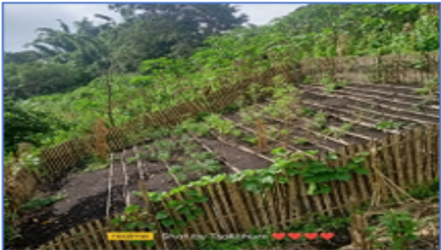
KVK Kiphire’s intervention was not just limited to providing technical know-how; it also included hands-on training and continuous supervision. Gloria was trained in the preparation of Jeevamrut, a bio-enhancer made from cow dung, cow urine, jaggery, pulse flour and water. This natural concoction, rich in beneficial microorganisms, plays a crucial role in improving soil fertility and enhancing plant growth. Additionally, Gloria was taught the principles of crop rotation, vermicomposting and rhizosphere management – all integral components of Natural Farming.
Armed with this newfound knowledge, Gloria began to implement these practices on her farm. The initial results were modest, but Gloria’s determination kept her going. She diligently prepared and applied Jeevamrut, rotated her maize and kholar crops and started producing organic inputs on her farm. With each passing season, the benefits of Natural Farming became more apparent.
The impact of Natural Farming on Gloria’s farm was nothing short of remarkable. By the third cropping season, significant improvements were visible in both crop yield and soil health. Maize cultivation, in particular, saw a 49.17% increase in productivity when grown in rotation with kholar. This increase in yield was a direct result of the improved soil fertility and pest management practices that Gloria had adopted.
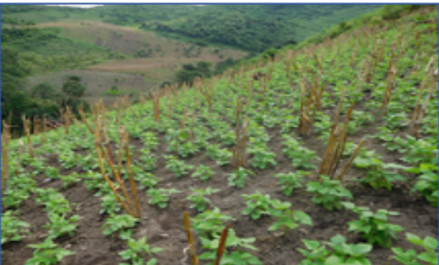
The benefits were not limited to crop production alone. Gloria’s on-farm generation of organic inputs also extended to livestock feed, reducing her dependency on external sources and lowering her overall farming costs. The soil nutrient levels on her farm saw a marked improvement, with nitrogen, phosphorus and potassium levels rising to 412.26 kg/ha, 52.24 kg/ha and 310.45 kg/ha, respectively, from the initial values of 378.89 kg/ha, 39.75 kg/ha and 278.69 kg/ha. This boost in soil fertility was a testament to the effectiveness of Natural Farming practices in restoring and maintaining soil health.
Another noteworthy achievement was the increase in soil organic carbon (SOC) stock by 3.25% after just one year of intervention. This increase in SOC is a positive indicator of the farm’s ability to sequester carbon, thereby contributing to climate change mitigation. Gloria’s farm had not only become more productive but also more resilient to environmental stresses.
The economic benefits of Gloria’s transformation were equally impressive. From an annual income of Rs. 30,000, Gloria’s earnings skyrocketed to Rs. 1.97 lakh within a year of adopting Natural Farming. This substantial increase in income was a direct result of higher crop yields, reduced input costs and the added value of organic produce, which commanded better prices in the market.
Gloria’s success did not go unnoticed in her community. She quickly became a role model for other farmers in Tsongpong and the surrounding villages. Her farm, once a modest piece of land struggling to produce enough to survive, had transformed into a thriving Natural Farming hub. The villagers, inspired by Gloria’s achievements, began to approach her for advice and guidance on how to implement Natural Farming practices on their own farms.
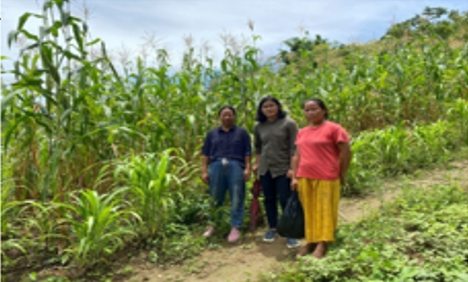
Gloria’s success extended beyond the boundaries of her farm. She emerged as a pioneering crusader in the rehabilitation of Jhum fallows, a practice where abandoned shifting cultivation plots are left to regenerate. Traditionally, these fallows were often left unused, leading to soil erosion and loss of valuable arable land. However, Gloria demonstrated that with the right techniques and commitment, these fallows could be revitalized and turned into productive agricultural land once again.
Through her efforts, Gloria has not only improved her own livelihood but has also contributed to the sustainable development of her community. She actively shares her knowledge and experiences with fellow farmers, conducting informal training sessions and demonstrations on her farm. Her story has inspired many others to follow in her footsteps and today, several farmers in Kiphire district have adopted Natural Farming practices, leading to a broader movement towards sustainable agriculture in the region.
Gloria’s journey to success was not without its challenges. The initial phase of transitioning to Natural Farming required a significant amount of labor and time investment. Preparing organic inputs like Jeevamrut and vermicompost was a labor-intensive process and there were moments when Gloria doubted whether the effort would be worth it. Additionally, the lack of immediate results during the first few cropping seasons tested her patience and resolve.
Another challenge was convincing the local community to adopt Natural Farming practices. Many farmers were skeptical about the effectiveness of these methods, particularly in the context of their traditional farming practices, which relied heavily on chemical inputs. However, Gloria’s success served as a powerful motivator, gradually breaking down these barriers and encouraging more farmers to experiment with Natural Farming.
Gloria also faced logistical challenges, such as the need for adequate water management in her farm, especially during the dry season. However, with the guidance of KVK experts, she implemented water conservation techniques such as mulching and the use of organic mulch to retain soil moisture. These efforts paid off, ensuring that her crops thrived even in less-than-ideal weather conditions.
The role of KVK Kiphire in Gloria’s transformation cannot be overstated. The KVK provided not only technical support but also the much-needed encouragement and motivation for Gloria to embrace change. The continuous follow-up and guidance from KVK experts ensured that Gloria’s farming practices were in line with the principles of Natural Farming and that she could overcome any challenges that arose during the transition.
KVK Kiphire’s efforts to promote Natural Farming in the region have had a ripple effect, with many other farmers benefiting from similar interventions. The KVK’s commitment to sustainable agriculture and its focus on empowering local farmers have made a significant impact on the agricultural landscape of Kiphire district. By creating demonstration units like the one on Gloria’s farm, KVK Kiphire has effectively showcased the potential of Natural Farming to improve livelihoods and Gloria’s story is just the beginning of a larger movement towards sustainable agriculture in Kiphire district. As more farmers embrace Natural Farming, the region stands to benefit from increased agricultural productivity, improved soil health and enhanced resilience to climate change. The success of farmers like Gloria serves as a powerful reminder that sustainable practices can lead to both economic and environmental benefits.
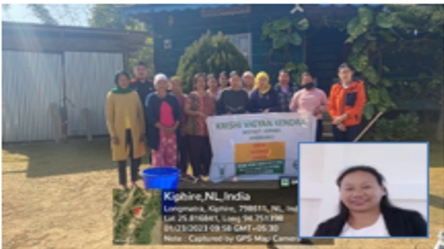
For Gloria, the journey is far from over. She continues to innovate and experiment with new techniques on her farm, always looking for ways to improve her practices and share her knowledge with others. Her vision for the future includes expanding her farm to include more diverse crops and livestock, as well as establishing a community seed bank to preserve and promote local varieties of seeds.
Gloria Sangtam’s journey from a struggling farmer to a successful practitioner of Natural Farming is a testament to the power of sustainable agriculture and the impact it can have on individual lives and communities. Her story is one of resilience, determination and the willingness to embrace change in the face of adversity. Through her efforts, Gloria has not only transformed her own life but has also paved the way for a brighter, more sustainable future for her community.
As Gloria’s story continues to inspire others, the hope is that more farmers in Nagaland and beyond will follow her example, adopting Natural Farming practices that are not only beneficial.


फेसबुक पर लाइक करें
यूट्यूब पर सदस्यता लें
X पर फॉलो करना X
इंस्टाग्राम पर लाइक करें