


For years, a 1.5-hectare farm in Mohura Chapori village of Lakhimpur district, Assam, followed a familiar cycle. The land was cultivated with Sali rice during the kharif season and, after the rice harvest, remained fallow throughout the rabi season. Like many farmers in the area, the family had limited awareness of the potential of rice fallow land for cultivating a second crop.
For young farmer Shri Kripanath Preme, however, the story began to change when he decided to explore ways of making better use of his family’s land.
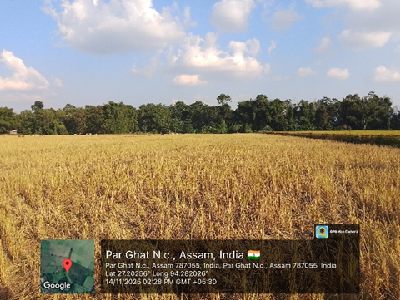
A postgraduate, Shri Preme chose to stay in his village and support his father in farming rather than seek employment elsewhere. The family depended primarily on income from rice cultivation, which was not sufficient to meet their financial needs. Keen to improve their livelihood, he approached Krishi Vigyan Kendra (KVK), Lakhimpur, seeking guidance on cultivating a rabi crop after Sali rice.
Recognising his initiative, a team of KVK scientists visited his village, surveyed the available rice fallow areas and created awareness among farmers about the potential of rapeseed and mustard cultivation after rice. Under the Promotion of Rapeseed & Mustard in Rice Fallow Areas programme during Rabi 2025–26, KVK Lakhimpur demonstrated the cultivation of the late-sown toria variety TS-38 on 1.0 hectare of Shri Preme’s rice fallow land.
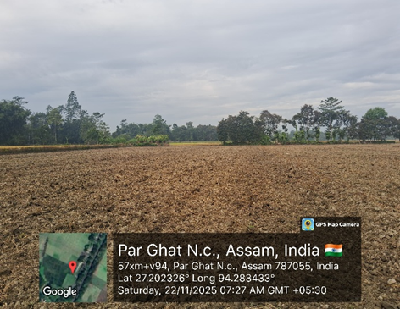
The intervention was simple but significant: instead of leaving the land unused after the Sali rice harvest, it was brought under a second crop. Following the package of practices recommended by KVK, Shri Preme sowed TS-38 during the fourth week of November, immediately after harvesting Sali rice. The recommended inputs included a seed rate of 10 kg/ha, along with 87 kg urea, 220 kg SSP, 25 kg MOP and 10 kg borax per hectare. The results were encouraging.
The late-sown toria crop performed remarkably well under the rice fallow conditions. Shri Preme recorded a yield of 8.95 q/ha, the highest among all beneficiary farmers under the programme. He earned a net income of ₹29,863 per hectare, with a benefit–cost ratio of 2.24.
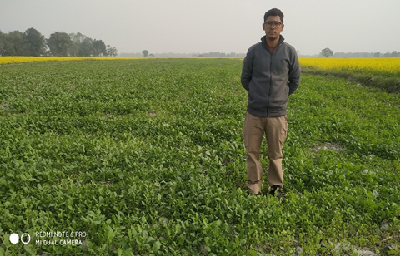
What was once considered unproductive land during the rabi season had now become an additional source of farm income. The successful performance of TS-38 demonstrated that rice fallow areas in Lakhimpur could be effectively utilised for rapeseed and mustard cultivation, opening up an opportunity to increase cropping intensity without requiring additional land.
For Shri Preme, the success was more than just a good harvest. Encouraged by the results, he plans to expand the cultivation of TS-38 over a larger area after the Sali rice harvest in the coming season. His experience has also caught the attention of neighbouring farmers, several of whom are now showing interest in adopting the variety and bringing their own rice fallow fields under rabi cultivation.
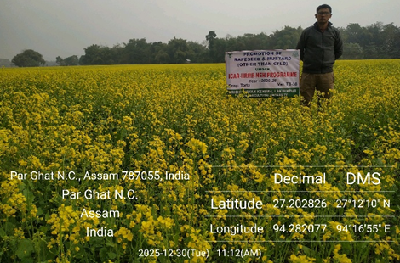
The success of this farmer-led demonstration highlights the potential of rice fallow intensification as a pathway to higher land productivity, additional farm income and improved livelihood security in Assam. With scientific guidance from KVKs and the adoption of suitable varieties and production practices, fields that traditionally remained idle after the rice harvest can be transformed into productive assets, enabling farmers to harvest not just another crop, but another opportunity for prosperity.
(Source: ICAR-KVK, Lakhimpur, Assam)


फेसबुक पर लाइक करें
यूट्यूब पर सदस्यता लें
X पर फॉलो करना X
इंस्टाग्राम पर लाइक करें